LGS vs Wood Framing: Which Is Better for Canadian Builders?
Speed, labor, sustainability, durability — a head-to-head comparison of Light Gauge Steel and traditional wood framing for Canadian builders.
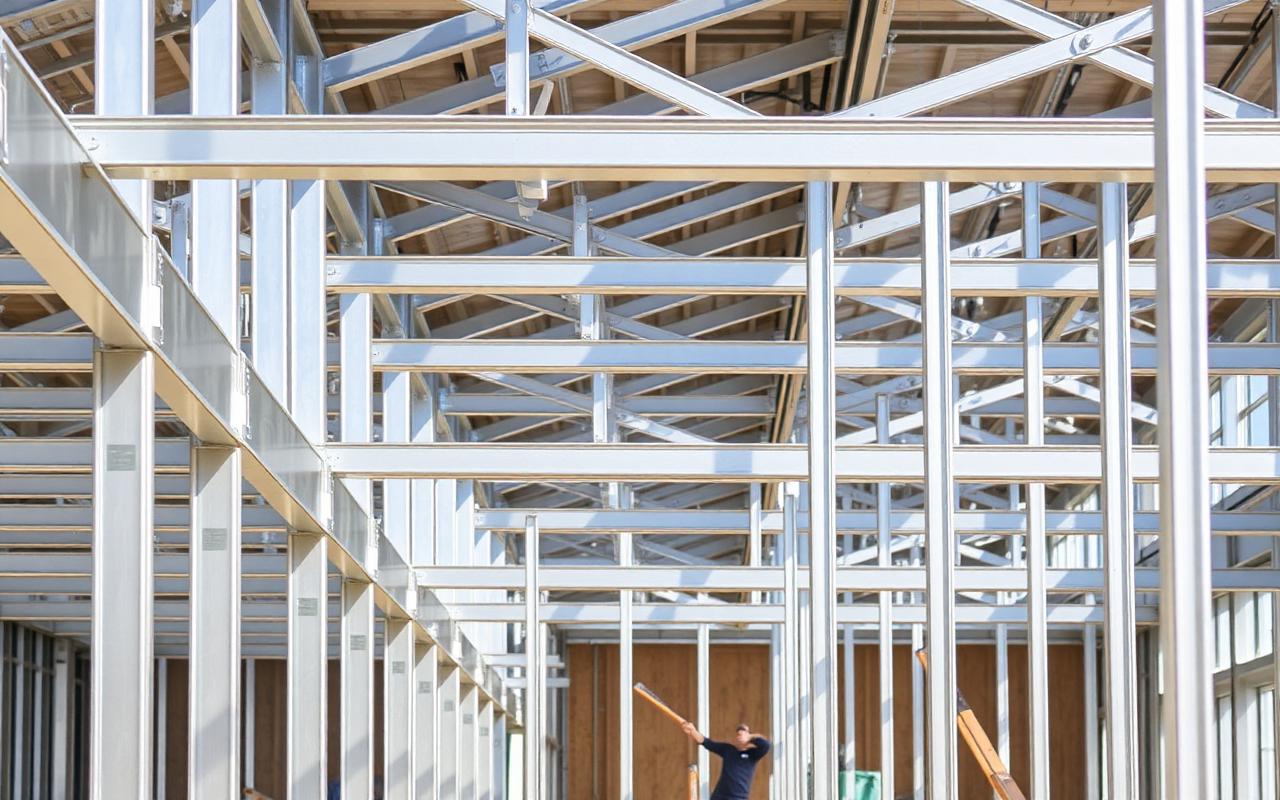
Choosing the right framing system is one of the most important decisions in any construction project. Wood framing has been the Canadian standard for decades, but Light Gauge Steel (LGS) is rapidly gaining ground for its efficiency, sustainability, and long-term performance.
What Is Light Gauge Steel (LGS)?
LGS framing uses cold-formed galvanized steel sections to create structural walls, floors, and roof systems. It is increasingly used across residential, commercial, and multi-unit construction in North America.
LGS vs Wood Framing Comparison
Construction Speed — Winner: LGS
- Faster assembly
- Reduced construction timelines
- Less on-site cutting
- Fewer installation errors
Labor Requirements — Winner: LGS
- Fewer workers required on site
- Faster installation reduces labor costs
- Less rework needed
Environmental Sustainability — Winner: LGS
- 100% recyclable material
- Reduced construction waste
- Lower landfill contribution
- Consistent material quality
- Reduced demand for harvested lumber
Dimensional Stability — Winner: LGS
Unlike wood, steel does not warp, twist, shrink, split, or rot — producing straighter walls and fewer long-term maintenance issues.
Moisture and Mold Resistance — Winner: LGS
- Basements
- Multi-family buildings
- Commercial projects
- High-humidity environments
Fire Resistance — Winner: LGS
Steel is non-combustible and contributes to improved fire performance compared to traditional wood framing.
Pest Resistance — Winner: LGS
- Termites
- Carpenter ants
- Wood-boring insects
Material Cost — Depends on Market Conditions
LGS materials may carry a higher sticker price, but savings from faster construction, reduced labor, less waste, and lower maintenance often result in a lower total project cost.
Why More Canadian Builders Are Choosing LGS
- Build faster
- Reduce labor dependency
- Improve sustainability
- Minimize waste
- Deliver higher-quality projects
Final Verdict: Is LGS Better Than Wood?
Wood framing remains widely used, but Light Gauge Steel offers significant advantages in today's market. For builders focused on speed, precision, environmental responsibility, durability, and labor efficiency, LGS is often the superior choice — and well positioned to become a leading framing solution for Canadian builders.
Frequently Asked Questions
- Is LGS framing better than wood framing in Canada?
- For speed, dimensional stability, sustainability, and labor efficiency, LGS outperforms wood. Wood is still common, but LGS is increasingly preferred for modern Canadian projects.
- Is light gauge steel framing more expensive than wood?
- LGS material costs can be higher, but faster install times, lower labor, less waste, and reduced maintenance typically deliver a lower total project cost.
- Does LGS framing resist moisture and mold?
- Yes. Galvanized steel does not rot or grow mold, which makes LGS especially well-suited to basements, multi-family buildings, and humid environments.
- Is LGS framing fire-resistant?
- Steel is non-combustible and improves a structure's fire performance compared to traditional wood framing.
Related Articles
 Pricing & Estimating
How Much Does Drywall Cost in Toronto in 2026?
A 2026 breakdown of drywall installation pricing across Toronto and the GTA — material, labor, finishing, and how to budget your renovation accurately.
Read article Project Planning
Basement Finishing Timeline: A Complete Guide for GTA Homeowners
From permits to final inspection — the phase-by-phase timeline for finishing a basement in Toronto and the GTA, with realistic durations.
Read article
// Next Project
Ready to build without delays?
Let's discuss how we can complete your project faster, with greater accuracy, and within budget. Free estimates returned in 2 business days.